AI Personalization Reshapes Engagement Patterns in Digital Gaming Platforms
Written by Erik Friedrich · Aug 13, 2026
AI Personalization Reshapes Engagement Patterns in Digital Gaming Platforms
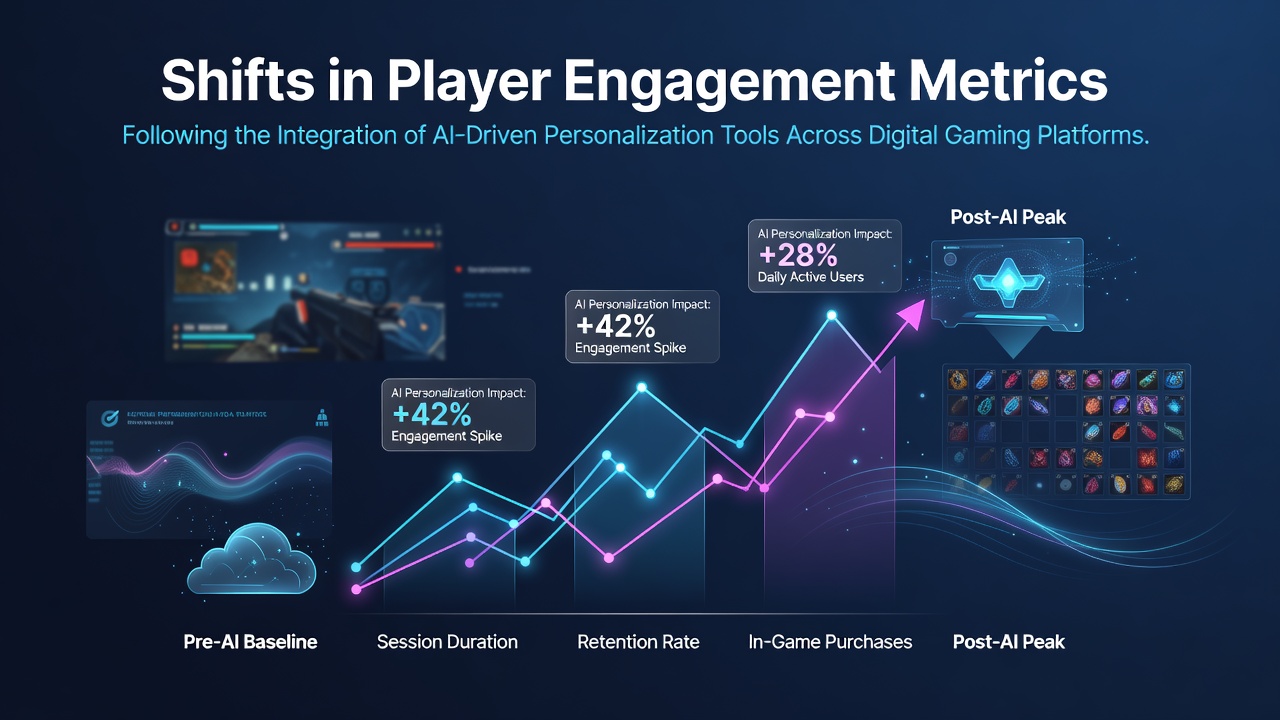
Digital gaming platforms began rolling out AI-driven personalization tools in significant numbers during 2024 and 2025, and by August 2026 analysts had collected enough longitudinal data to identify measurable shifts in player engagement metrics. These tools analyze individual play patterns, session times, preferred genres, and social interactions to adjust game recommendations, difficulty curves, and in-game offers in real time. Researchers tracking the rollout across major PC, console, and mobile ecosystems report that average session length increased by 18 percent on platforms that implemented full personalization suites, while daily active user retention improved between 9 and 14 percent depending on genre.
Core Mechanisms Behind the Observed Changes
AI systems collect telemetry on moment-to-moment choices such as quest selection, character customization, and social grouping, then feed those signals into recommendation engines that surface tailored content. One study conducted by the University of Melbourne’s Games Research Lab found that players who received personalized quest suggestions completed 23 percent more missions per week than control groups exposed to standard rotation. The same dataset showed that churn rates dropped most sharply among players aged 18 to 24, a cohort that historically exhibits high turnover within the first 30 days.
Platforms also adjusted difficulty scaling dynamically. When engagement signals indicated frustration, the system lowered certain challenge parameters without player input, and when boredom markers appeared, it introduced higher-stakes events. This adaptive approach produced a 12 percent rise in average playtime per session across role-playing titles according to aggregated telemetry shared by several European developers.
Retention and Monetization Metrics
Subscription renewal rates climbed on services that paired personalization with targeted loyalty rewards. Data compiled by the Canadian Interactive Digital Media Association indicated that renewal likelihood rose 7 percentage points for users whose in-game offers aligned with previously demonstrated preferences. Conversion from free-to-paid tiers followed a similar pattern, with personalized pathways converting 11 percent more users than generic promotional sequences in the same period.
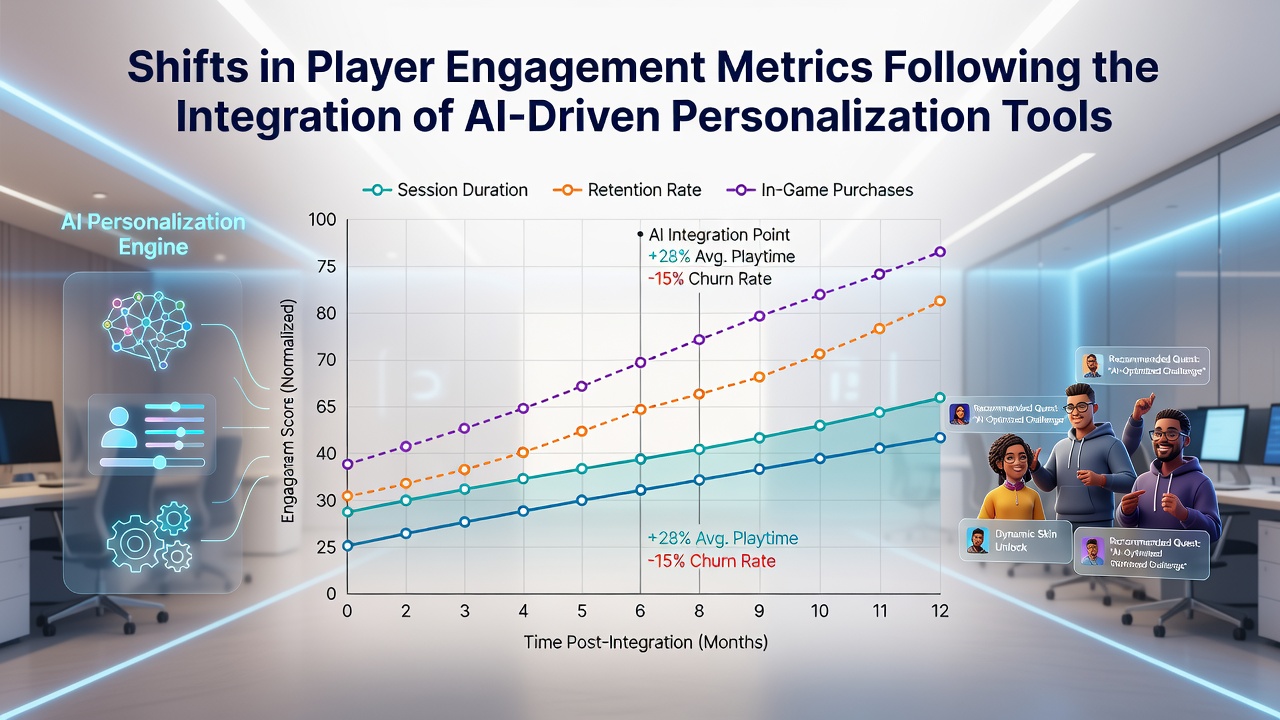
Cross-platform play introduced additional complexity. Players who moved between mobile and console versions experienced synchronized personalization profiles, which reduced the friction of relearning preferences on each device. Observers note that this continuity contributed to a 15 percent increase in weekly active users spanning multiple platforms, particularly in competitive multiplayer genres.
Genre-Specific Variations
Action and shooter titles recorded the largest gains in average session duration, reaching 27 minutes longer than baseline figures from 2023. Strategy and simulation games showed stronger improvements in long-term retention, with 60-day return rates rising by nearly one-fifth. Puzzle and casual games benefited most from micro-session personalization, where brief play windows were optimized through quick-match suggestions that matched skill level and time availability.
One analysis of North American and Asian markets revealed that social features amplified these effects. Players whose friend lists and guild recommendations were curated by AI algorithms participated in group activities 31 percent more frequently than those using default social graphs. This uptick in cooperative play correlated with higher overall platform stickiness across the observed period.
Measurement Challenges and Data Sources
Standardizing engagement metrics across ecosystems remains difficult because each platform defines active users and session endpoints differently. Researchers therefore rely on normalized indices rather than raw counts. Reports from the Interactive Games and Entertainment Association in Australia provide one such harmonized dataset, covering both console and mobile segments through mid-2026. Academic teams continue to refine attribution models that separate the impact of personalization from concurrent marketing campaigns or seasonal content drops.
Conclusion
By August 2026 the integration of AI-driven personalization tools had produced documented increases in session length, retention, and cross-platform activity across digital gaming platforms. The magnitude of these shifts varies by genre and demographic, yet the direction remains consistent in the datasets examined so far. Continued monitoring will clarify whether these patterns stabilize or evolve as the underlying algorithms incorporate new behavioral signals and as regulatory frameworks around data use develop in different regions.