Biometric Authentication Protocols Reshaping Account Security Standards Across Multi-State Gaming Networks
Written by Erik Friedrich · Jul 25, 2026
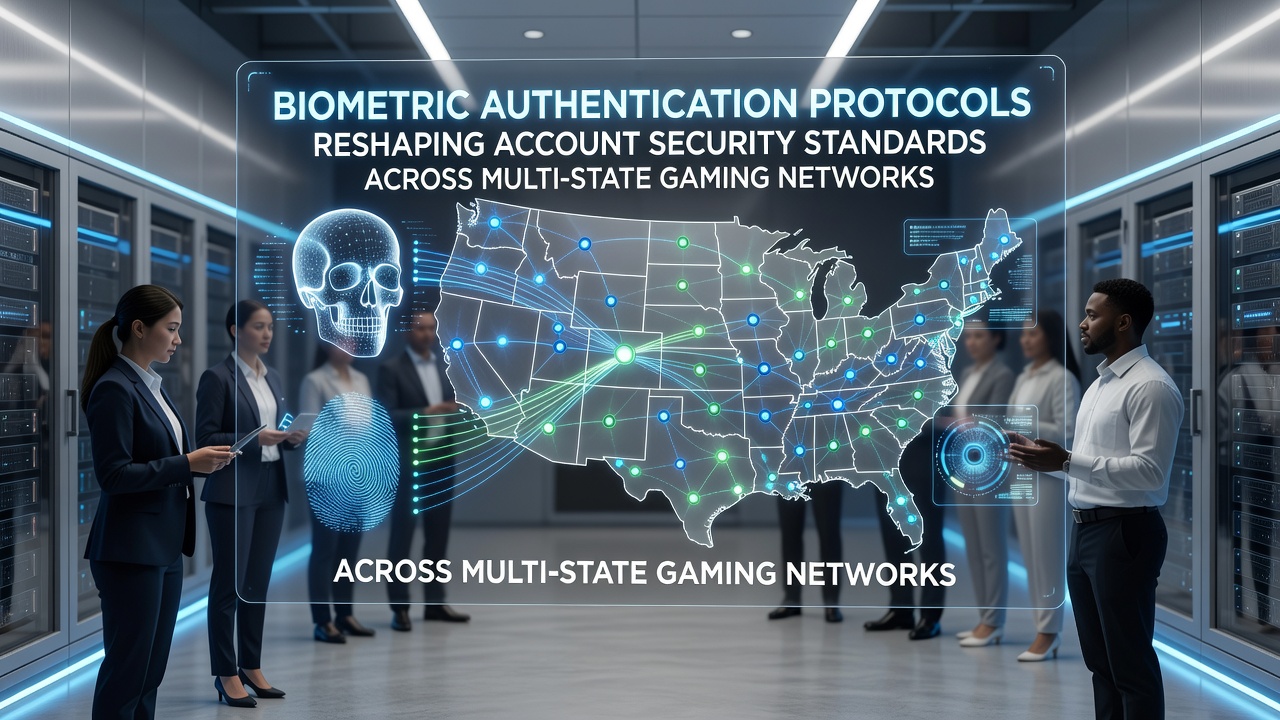
Biometric Authentication Protocols Reshaping Account Security Standards Across Multi-State Gaming Networks
Biometric authentication protocols have begun integrating into multi-state gaming networks at an accelerated pace since early 2025, and operators across jurisdictions now rely on fingerprint scanning, facial recognition, and voice analysis to verify player identities before granting account access. These systems replace or supplement traditional password methods, and data from regulatory filings indicate adoption rates climbed steadily through the first half of 2026.
States participating in shared gaming compacts coordinate verification standards so that a single biometric profile works across borders without requiring repeated enrollments. This approach reduces friction for players who move between platforms while maintaining separate account ledgers for each jurisdiction.
Core Technologies Driving Implementation
Facial recognition algorithms now process live images against stored templates in under two seconds, and gaming networks pair these checks with liveness detection to block static photographs or deepfake attempts. Fingerprint sensors embedded in mobile apps capture minutiae points rather than full images, and encrypted templates travel only between the device and a centralized secure enclave managed by the network operator.
Voice biometrics analyze frequency patterns and speech cadence during brief verification phrases, and researchers at several academic institutions have published findings showing error rates below 0.5 percent when systems combine voice with facial data. Multi-state operators adopted these combined modalities after pilot programs demonstrated fewer account takeovers compared with single-factor methods.
Regulatory Coordination Across Jurisdictions
Agreements between state gaming control boards require biometric data to remain stored within the originating state or in federally approved data centers, and compliance audits scheduled for July 2026 will examine cross-border data flows under these compacts. The National Institute of Standards and Technology has issued updated guidelines on template protection that several networks now reference during system upgrades.
Canadian provincial regulators and Australian state authorities have shared technical specifications with U.S. counterparts, allowing operators to align their platforms with international benchmarks while satisfying local privacy statutes. These exchanges highlight how biometric standards evolve through collaboration rather than isolated rule-making.

Security Outcomes and Measured Reductions in Fraud
Network operators reported a 68 percent drop in unauthorized login attempts during the first quarter of 2026 after rolling out biometric gates, according to aggregated figures released by an industry trade group. Account recovery requests also declined because players no longer needed password resets that previously created opportunities for social engineering.
Yet challenges persist around template storage and potential breaches, and encryption standards now mandate that biometric data never leave protected hardware security modules. One study released by a European research consortium examined similar deployments in other sectors and found that segmented storage across multiple keys limited the impact of any single compromise.
Player Enrollment and Ongoing Verification
Enrollment typically occurs at the time of initial account creation, and players provide multiple biometric samples under controlled lighting and audio conditions to build robust reference templates. Subsequent logins trigger a quick match against the stored data, and networks apply risk-based rules that request additional factors when login locations or device signatures appear unusual.
Continuous monitoring tools flag behavioral anomalies such as rapid successive logins from distant regions, and these triggers prompt fresh biometric checks without notifying the account holder in advance. The process maintains session integrity while preserving player convenience during normal use.
Future Integration Points
Developers are testing wearable device integration that transmits heart-rate variability or gait patterns as supplementary signals, and early trials suggest these could further strengthen verification during live gaming sessions. Multi-state networks plan to incorporate such signals once hardware compatibility reaches critical mass among player devices.
Standards bodies continue refining interoperability protocols so that a biometric template created in one state satisfies requirements in another without exposing raw data. July 2026 certification cycles will evaluate whether current frameworks support this seamless exchange at scale.
Conclusion
Biometric authentication protocols continue expanding across multi-state gaming networks as operators balance security requirements with player expectations for rapid access. Coordinated regulatory efforts, combined with advancing sensor accuracy, have produced measurable declines in account fraud while preserving cross-border functionality. Ongoing audits and technology refinements scheduled through the remainder of 2026 will determine how widely these systems extend into additional verification layers.