Exploring Design Features That Guide User Selections in Web-Based Slot Interfaces
Written by Erik Friedrich · Aug 13, 2026

Exploring Design Features That Guide User Selections in Web-Based Slot Interfaces
Digital slot platforms rely on carefully arranged visual and interactive components that shape how users approach each round, from initial bet selection through to the resolution of outcomes. Researchers have documented patterns where layout choices, color schemes, and animation timing align with established findings on attention allocation and response tendencies in online environments. Data from industry monitoring in August 2026 indicates continued growth in mobile slot traffic across regulated markets, with interface refinements appearing alongside reported shifts in session duration metrics.
Core Visual Components and Attention Pathways
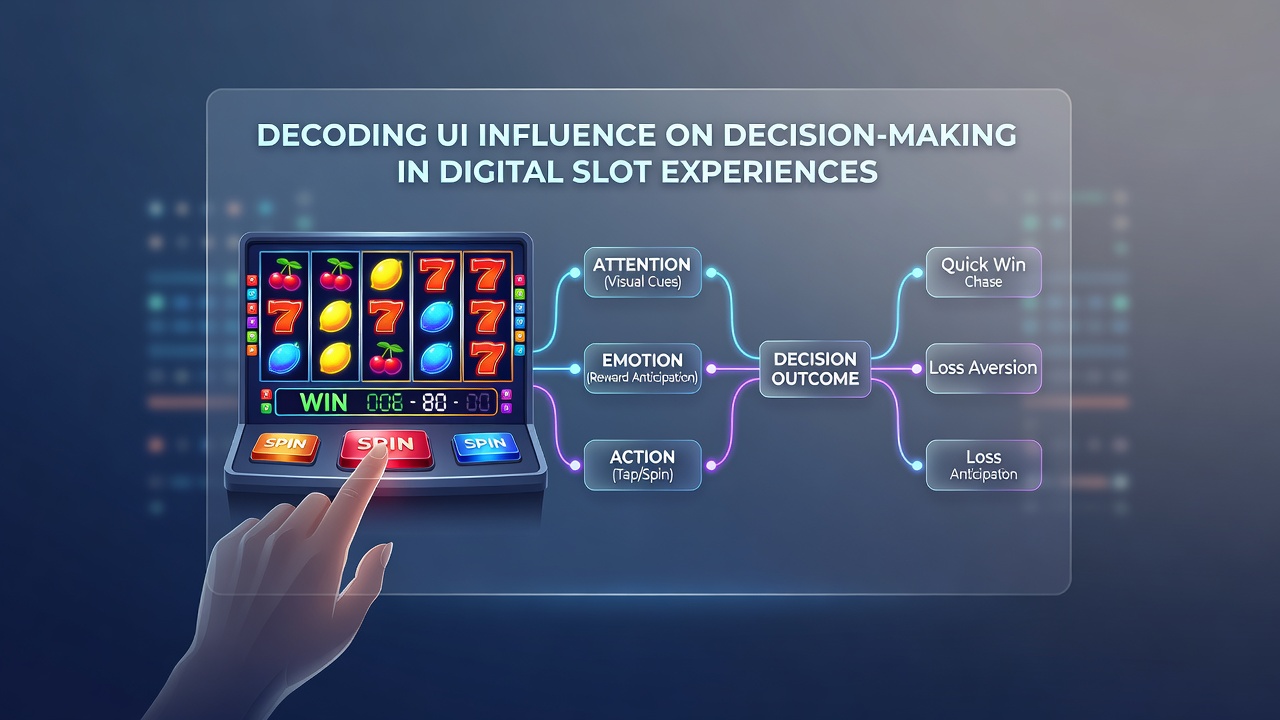
Screen elements such as reel positioning, symbol sizing, and background gradients direct eye movement across the display area, according to eye-tracking studies conducted by academic teams. Observers note that high-contrast win animations and progressive meter updates often coincide with extended viewing periods on specific reel sections, while muted secondary panels reduce dwell time on balance information. These arrangements draw from established principles in human-computer interaction research, where spatial hierarchy influences the sequence of user actions without requiring explicit instruction.
Button placement follows similar logic, with primary spin controls typically occupying the lower central zone to match natural thumb reach on handheld devices. Secondary controls for bet adjustment sit adjacent yet smaller, creating a visual hierarchy that data logs show corresponds to higher selection rates for default stake options. Figures from platform analytics reveal that users encountering standardized layouts across multiple titles demonstrate quicker initiation of play sequences compared with those facing inconsistent arrangements.
Interactive Mechanics and Choice Architecture
Autoplay toggles, quick-spin toggles, and turbo modes represent additional layers that compress decision intervals between rounds. Studies published through university research centers have measured reduced deliberation time when these options remain visible and one-tap accessible, while their absence correlates with more frequent manual stake reviews. Near-miss visual cues, generated through symbol alignment patterns just short of winning combinations, appear in numerous titles and connect to documented increases in continued play rates across sampled user groups.
Sound design works in tandem with visuals, where escalating audio cues during feature builds coincide with higher bet escalation selections in session data. Platform operators report that adjustable volume and mute settings, when positioned within the main control cluster, receive higher engagement than those buried in submenus. This placement pattern aligns with findings from interaction design evaluations that emphasize proximity for frequently referenced functions.
Information Display and Risk Assessment Cues
Paytable access, volatility indicators, and return-to-player percentages occupy varying positions depending on the title, yet their visibility influences how users calibrate expectations before committing funds. Reports from the Australian Gambling Research Centre have tracked correlations between prominent display of these metrics and adjustments in average wager amounts across monitored sessions. Conversely, when such details require multiple taps to surface, logs indicate lower interaction rates with the information itself.
Balance and win meters update in real time during play, providing immediate feedback that researchers link to momentum effects in subsequent selections. Progressive jackpot counters that increment visibly across the interface draw sustained attention, with cross-platform data showing elevated participation in linked networks during periods of rapid growth. These dynamic displays operate alongside static regulatory notices, creating layered information environments where users navigate multiple data streams simultaneously.
Cross-Platform Consistency and Behavioral Patterns
Developers increasingly apply unified design systems across desktop and mobile versions, reducing friction when users switch devices mid-session. Metrics compiled by the National Council on Problem Gambling in mid-2026 highlight that consistent navigation structures correspond with steadier play pacing, whereas abrupt layout changes between versions associate with higher rates of session abandonment. Adaptive scaling for different screen sizes further refines touch targets, ensuring that core controls remain reachable regardless of device orientation.
Personalization features, including saved preferences for reel speed or sound profiles, allow returning users to bypass initial setup steps. Platform records demonstrate that accounts with stored configurations initiate rounds at higher frequencies than those requiring repeated adjustments, illustrating how memory functions within the interface streamline repeated interactions.
Conclusion
Interface elements in digital slot environments operate through interconnected visual, auditory, and functional channels that collectively structure the sequence of user decisions. Evidence from regulatory reports, academic inquiries, and platform analytics continues to map these relationships, revealing consistent associations between specific design choices and measurable behavioral indicators. As platforms evolve through August 2026 and beyond, ongoing documentation of these patterns provides the factual basis for understanding how layout decisions shape engagement within regulated digital gambling spaces.