How Digital Wallet Adoption is Reshaping Live Dealer Participation Across International Markets
Written by Ellis Schmidt · Jun 22, 2026
How Digital Wallet Adoption is Reshaping Live Dealer Participation Across International Markets
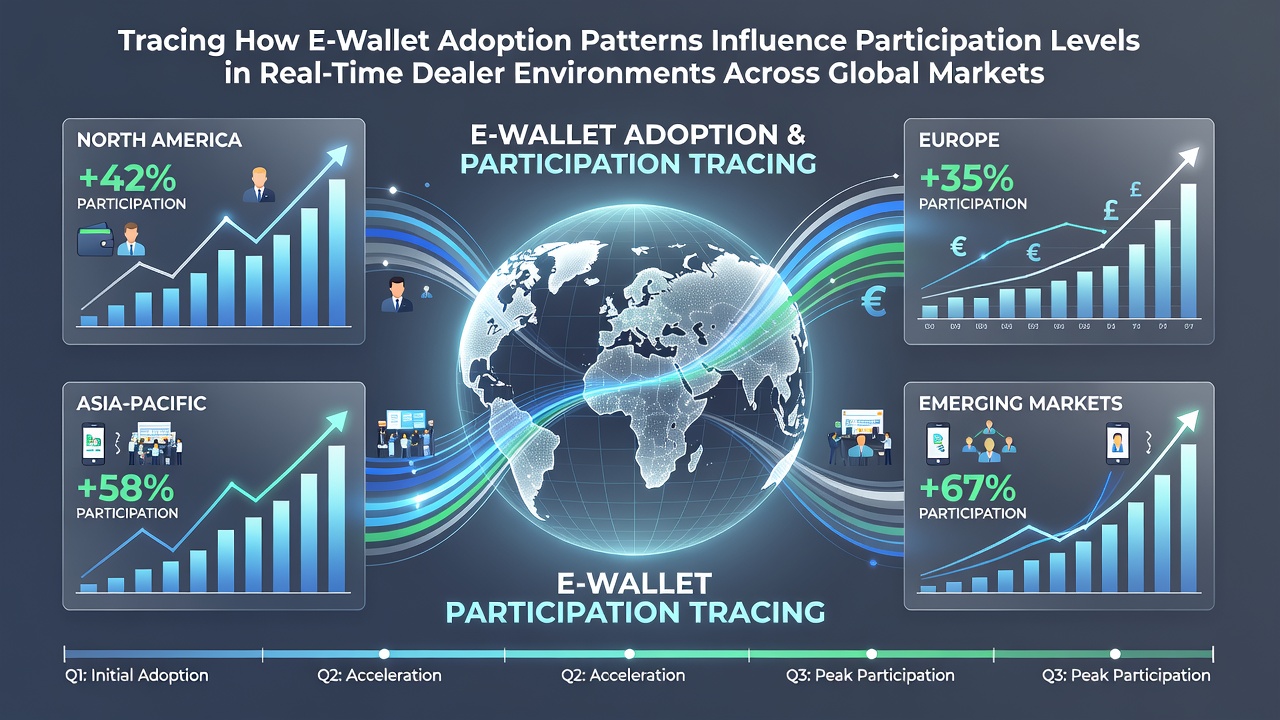
Digital wallet services have expanded their reach into live dealer platforms over recent years, and researchers tracking transaction data note clear correlations between adoption rates and session durations in real-time environments. Markets in Asia recorded the steepest increases in wallet-linked accounts during the first half of 2026, while participation metrics in European jurisdictions showed steadier but consistent gains according to figures compiled by the European Gaming and Betting Association.
Regional Adoption Patterns and Their Reach
Payment providers such as local digital wallets integrated with casino operators in Southeast Asia saw user bases grow by double digits between January and June 2026, and this expansion coincided with higher volumes of table game sessions that lasted beyond thirty minutes. Observers tracking these trends point to simplified deposit flows as one factor that lowered barriers for players entering live dealer rooms, whereas markets with slower wallet penetration maintained flatter participation curves.
In North American regulated spaces, data from state-level oversight bodies indicate that e-wallet options appeared in more live dealer interfaces after regulatory updates in late 2025, and subsequent reports show incremental rises in active user counts during peak evening hours. Those monitoring cross-border flows note that Canadian platforms experienced similar upticks once major wallets gained licensing approvals, creating smoother pathways for recurring play without repeated card verifications.
Participation Metrics Across Live Dealer Formats
Live dealer environments rely on real-time interaction, so payment friction directly affects how often users join tables or extend their sessions. Studies compiled by academic researchers at institutions in Australia reveal that platforms offering instant wallet transfers recorded elevated retention rates compared with those limited to traditional banking rails, and the difference became most visible in blackjack and roulette variants that run continuously.

What's interesting is how these patterns vary by device type. Mobile users in markets where wallets dominate transaction logs show longer average connection times, while desktop sessions remain more stable regardless of payment method. Industry reports released in June 2026 highlighted that operators who prioritized wallet onboarding experienced measurable lifts in concurrent player numbers during weekend slots, particularly in regions where cash-out speeds improved alongside deposit ease.
Influences on Player Behavior and Platform Design
Platform operators have adjusted interface layouts to surface wallet options earlier in the registration funnel, and analysts reviewing user flow data observe that this placement reduces drop-off before first deposits. In several Latin American jurisdictions, regulatory sandboxes allowed testing of wallet integrations, and early results indicated higher repeat participation among users who completed their initial transactions through these channels.
Security features built into modern wallets, including biometric confirmation and transaction limits, have also played a role in encouraging longer engagement because players report fewer interruptions from verification prompts. Research groups examining global datasets note that markets with strong consumer protection frameworks around digital payments tend to sustain steadier growth in live dealer activity, whereas regions still developing those safeguards show more variable patterns.
Global Market Comparisons Through Mid-2026
Comparative analysis covering the period ending June 2026 demonstrates that Asia-Pacific operators captured the largest share of wallet-driven volume increases, followed by select European markets where cross-border wallet compatibility improved. North American figures, while smaller in absolute terms, displayed the fastest month-over-month acceleration once additional states finalized integration rules.
These shifts have prompted software providers to refine their application programming interfaces for faster wallet handshakes, and the resulting technical improvements have supported higher table occupancy rates during high-demand periods. Data aggregators tracking these metrics emphasize that the relationship between wallet adoption and participation remains influenced by local regulations, currency controls, and existing banking infrastructure rather than a single universal driver.
Conclusion
Patterns emerging from transaction and session data across multiple continents illustrate that e-wallet adoption continues to intersect with live dealer participation in measurable ways. As platforms refine their payment ecosystems and regulators refine oversight frameworks, the interplay between these elements is expected to shape operational priorities through the remainder of 2026 and beyond. Continued monitoring by industry associations and academic teams will provide further clarity on how these dynamics evolve in different regulatory climates.